Why Do I Feel Constantly on Edge, and What Can I Do?
Feeling constantly on edge can happen when stress, worry or everyday pressures make it difficult to settle, even during a quiet moment. It does not tell you the cause on its own. Start with one manageable pause and one practical need you can address. If the feeling persists, worsens or interferes with daily life, speak with a qualified healthcare professional.
You sit down, but your shoulders stay lifted. A message has not been answered, and you keep reaching for your phone. Nothing urgent is happening, yet part of you feels as though you should be getting ready for something.
This guide answers common questions about feeling on edge, offers small things to try and explains where to find reliable UK and US support. It also introduces Stop Feeling on Edge, our optional guided hypnosis recording with Theo and Mystic Dawn (Theta).
Published 22 November 2026. General information for adults, not a diagnosis or an individual treatment plan.
What does “feeling on edge” mean?
People often use the phrase to describe feeling tense, restless, irritable or unable to relax. You might be thinking several steps ahead, finding it hard to enjoy a break or feeling impatient with yourself for not settling.
The NHS guide to anxiety, fear and panic describes experiences including nervousness, trouble relaxing and repeated checking. These experiences can overlap with anxiety, but recognising them in yourself does not establish a diagnosis.
Why do I feel on edge when nothing seems wrong?
An obvious problem is not always present at the moment you notice the feeling. The US National Institute of Mental Health (NIMH) explains that anxiety can occur without a current threat. Its guidance distinguishes occasional worry from persistent anxiety that disrupts life.
That does not mean you should assume you have generalised anxiety disorder, or generalized anxiety disorder as it is spelled in the US. A clinician can assess symptoms and consider other possible explanations. A blog, recording or symptom checklist cannot do that for you.
For an ordinary unsettled moment, it may help to ask a concrete question: “What has today asked of me, and what do I need now?” Perhaps you have rushed through lunch, carried a work problem into the evening or spent a long time waiting for an answer. You can respond to a practical need without first solving every feeling.
What can I try when I cannot seem to relax?
Choose one small step rather than turning relaxation into another demanding task. The suggestions below are optional everyday practices; they are not a treatment plan.
1. Find a comfortable point of contact
If you are somewhere safe to pause, notice the chair beneath you or the floor under your feet. Keep your eyes open if you prefer. Let your breathing remain comfortable instead of forcing a deep breath. If paying attention to sensations feels uncomfortable, look at something ordinary in the room instead.
2. Take one demand off the moment
Try a simple sentence: “I can take a short break even if I feel unsettled.” You are giving yourself permission to pause, rather than setting a target of complete calm. If the feeling stays, you have not failed.
3. Choose one practical next step
Would it help to eat, get some rest, clarify an arrangement or ask someone for support? Pick something specific and achievable. If there is a real problem requiring action, attend to it. Letting go does not mean ignoring an unsafe situation or giving up a useful boundary.
4. Return to an ordinary activity
You might finish your drink, prepare lunch or listen to someone whose company you enjoy. Allow that activity to have some of your attention without repeatedly testing whether you feel different yet. These are invitations, not exercises you must complete.
For further self-help ideas, NHS Every Mind Matters: managing anxiety offers relaxation, CBT-based resources and ways to understand patterns of worry. NIMH also discusses sleep and caffeine alongside appropriate care. Lifestyle changes can support wellbeing, but do not replace needed treatment.
What if my mind keeps asking “what if?”
Write down the concern and ask whether there is something useful to do about it now. “I need to confirm tomorrow’s appointment” has a practical next step. “What if tomorrow goes badly?” may have no answer you can obtain tonight.
The NHS guide to tackling worries explains writing concerns down, setting aside a short period for worry and separating practical problems from hypothetical concerns. You can explore its full instructions rather than trying to work through everything at once.
If future events are your main focus, our related guide, How Can I Stop Worrying About Tomorrow Before It Happens?, explores that particular situation.
When should I seek professional help for feeling on edge?
Ask for help if the feeling is persistent, difficult to manage or affecting sleep, work, relationships or everyday activities. You do not need to reach a crisis or wait until a diagnostic time threshold has passed before discussing your concerns.
The NHS advises seeking help when you are struggling to cope or self-help is not helping. NIMH recommends professional support when anxiety starts disrupting everyday life. Established care for an anxiety disorder can include talking therapy, such as CBT, medication or a combination, depending on an individual assessment.
New or concerning physical symptoms deserve medical assessment rather than being assumed to be anxiety. For severe symptoms or an immediate emergency, seek urgent medical help.
Where can I find advice and support in the UK?
- Understand symptoms and possible next steps: read the NHS anxiety, fear and panic guide.
- Explore practical self-help: use Every Mind Matters and its linked exercises.
- Find treatment in England: the NHS Talking Therapies finder provides a self-referral route for adults, with some services also accepting 16- and 17-year-olds. You do not need a diagnosed condition to enquire.
The linked self-referral finder is for England. If you live in Scotland, Wales or Northern Ireland, ask your GP or local health service about the route available where you live. A GP can also help if you are unsure which kind of support is appropriate.
Where can I find advice and support in the US?
- Understand ongoing anxiety: read NIMH: Generalized Anxiety Disorder — What You Need to Know. It explains symptoms, assessment and established treatment options.
- Discuss your own situation: speak with a primary care provider or licensed mental health professional about what you have noticed and how it affects you.
- Find care that fits your circumstances: SAMHSA’s guide to finding a health care professional or program offers routes based on insurance and other circumstances, including options for people without insurance.
These organisations provide independent information. Their inclusion does not imply that they endorse Letting Go Hypnosis or this recording.
Can guided hypnosis help me explore feeling less on edge?
Our recording offers a structured opportunity to rest and practise imagined everyday moments. It is intended for general relaxation and personal reflection. We do not present it as a treatment for an anxiety disorder or claim that this particular recording has been clinically tested.
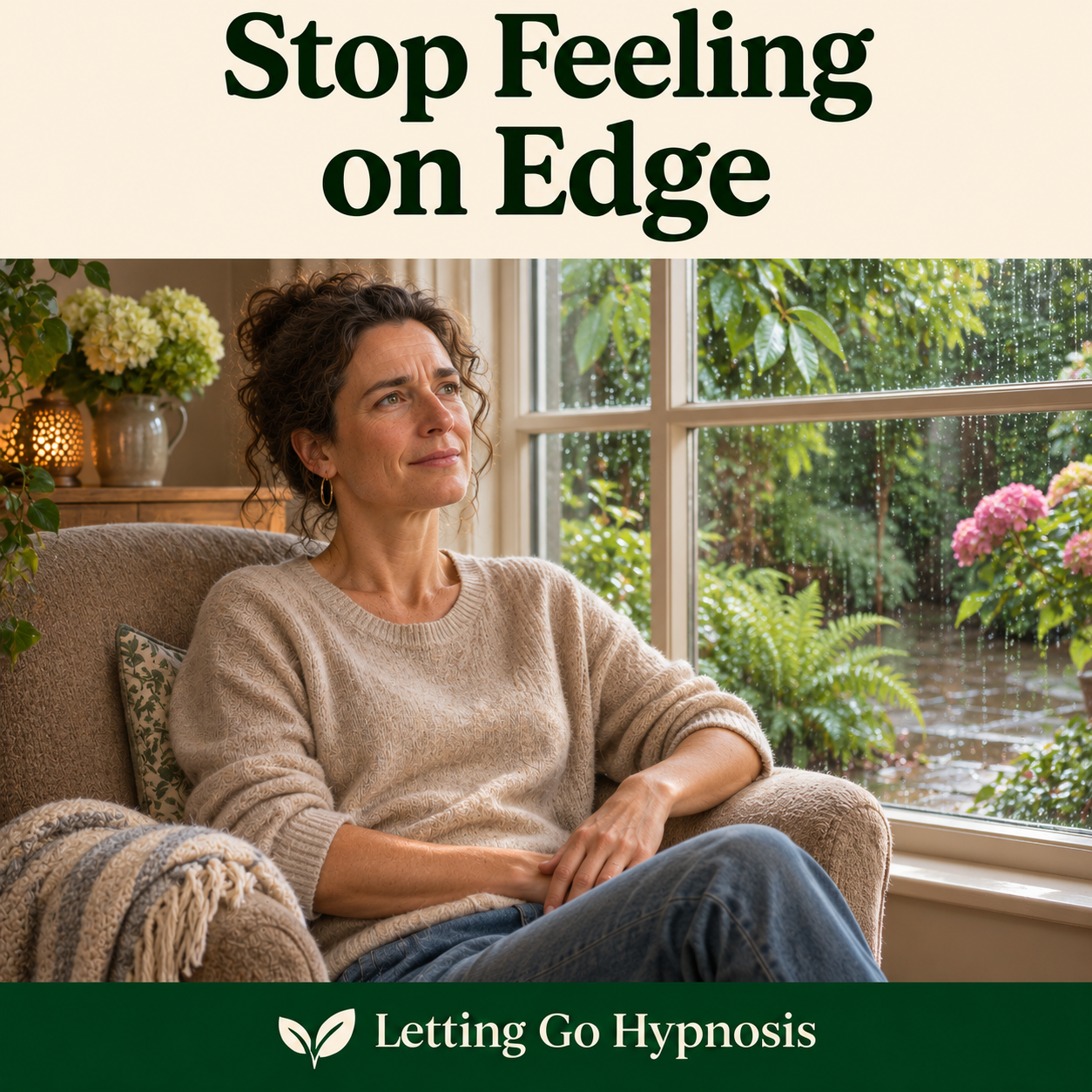
Stop Feeling on Edge uses Theo’s calm British narration and the Letting Go Method. An imagined chair beside a garden window gives you a comfortable place to return to as you explore a morning drink, lunch while waiting for a reply and an evening with someone you enjoy being with.
The emphasis is on gently making room for manageable feelings and loosening some of the extra struggle around them. Our practical guide to the Letting Go Method explains the approach in more detail. It does not require suppressing emotions, abandoning boundaries or making yourself feel calm on command.
Can I listen to Stop Feeling on Edge free on YouTube?
Yes. The complete recording is available on YouTube below. It lasts 30 minutes 59 seconds and includes softly mixed Mystic Dawn (Theta) music by Christopher Lloyd Clarke. The music provides a gentle background; its name does not guarantee a particular brainwave state or result.
Watch Stop Feeling on Edge directly on YouTube or explore more recordings on the Letting Go Hypnosis channel.
Why buy the MP3 if the YouTube recording is free?
The paid option is for listeners who want an ad-free MP3 to download and keep for personal offline listening. It is a one-off purchase with no subscription. The UK shop price is £6.95; check the product page and checkout for the price displayed for your location.
| Option | What you receive |
|---|---|
| Free YouTube video | The full recording through YouTube, subject to the platform’s playback and advertising arrangements. |
| Paid MP3 | An ad-free audio file to download, keep and play offline on compatible devices, with no subscription. |
Own Stop Feeling on Edge
Theo with Mystic Dawn (Theta) · 30 minutes 59 seconds · Ad-free MP3
View the recording and download your own copy
Explore Anxiety & Worry recordings, browse the full shop or get the Letting Go Hypnosis Android app.
How should I listen safely?
Allow around 32 uninterrupted minutes somewhere you can sit or lie down safely. Never listen while driving, operating machinery or doing anything that needs your full attention. All scenes are imagined; do not act them out physically while listening.
Keep feelings mild enough to meet comfortably. You remain in control and can move, open your eyes, pause or stop. If anything feels too much, look around the room and reconnect with where you are. Let the gradual return finish and become fully awake before standing or resuming activities.
Frequently asked questions
Does feeling on edge mean I have an anxiety disorder?
No. The phrase describes an experience, not a diagnosis. A professional can assess persistent symptoms and consider possible causes. Seek advice if it is affecting your daily life.
Do I have to be completely relaxed for hypnosis?
This recording does not ask you to achieve perfect calm. Choose a safe time to rest and engage only with suggestions that feel manageable. You can keep your eyes open or stop.
How quickly will the recording work?
There is no guaranteed result or timetable. You may enjoy the rest, prefer a different recording or decide guided hypnosis is not for you. Persistent anxiety deserves appropriate professional support.
Is this a sleep recording?
It is designed for general relaxation and finishes with a return to alertness. If bedtime worry is your main concern, see our guide to quieting your mind for sleep.
Where can I learn more before choosing a recording?
Read How Hypnosis Works, explore the blog or contact Letting Go Hypnosis with a product question. For individual health advice, contact a qualified professional.
Sources and recording credits
The NHS, NIMH and SAMHSA sources linked throughout this article were checked on 22 November 2026. Guidance and service availability can change; follow the current information on those official pages.
Narration: Theo.
Music: Mystic Dawn (Theta) by Christopher Lloyd Clarke, Enlightened Audio, used under licence.
Published by Letting Go Hypnosis, the consumer brand of Letting Go Labs Ltd.