How to Reduce Sugar Cravings: Pause, Notice and Choose
You finish a demanding day, put the kettle on and find yourself reaching for something sweet before you have decided what you want. Or the urge arrives at your desk, on a break or after dinner. If this sounds familiar, you do not need another rule telling you to be more disciplined.
A useful starting point is to create a small space to notice what is happening. This guide explores practical ways to respond to sugar cravings, explains UK and US sugar-label guidance, and introduces a guided hypnosis recording for relaxation and reflection.
1. Notice the moment without judging yourself
Rather than labelling a craving “bad”, describe the situation plainly. Perhaps you have gone a long time without eating, are taking your usual tea break, or want something enjoyable after a difficult conversation. Several things can be true at once: you can be hungry and stressed, or simply enjoy the taste of chocolate.
For a few days, notice the time, place and circumstances of one recurring moment. You do not need to count every bite or keep a detailed food diary. A short observation such as “I arrive home hungry with nothing ready” may suggest a more useful change than a promise to try harder.
2. Make room for regular, satisfying food
Do not use a craving-management exercise to postpone a needed meal. Consider whether your daily routine gives you realistic opportunities to eat. For a long shift, that may mean taking a lunch you enjoy and a convenient snack rather than relying on whatever is available when you finally stop.
Choose meals and snacks that suit your preferences, budget and healthcare advice. An example might be a sandwich and fruit, or plain yoghurt with oats and berries. These are options, not rules. The aim is a workable routine, not a perfect menu or a reason to avoid carbohydrates.
3. Practise “pause, notice, choose”
- Pause: take one comfortable breath, without forcing it.
- Notice: ask what you want and what you need. Hunger, enjoyment, rest and reassurance are different needs, but they can overlap.
- Choose: make a response that fits the moment. That might be a meal, a snack, the sweet food you want, a break or a conversation.
If you choose something sweet, you have not failed the exercise. You can enjoy it without turning the rest of the day into a punishment. The practice is about making a more deliberate choice, not proving that you can say no.
4. Choose one manageable change
Start with one repeated situation rather than trying to overhaul your diet. The NHS guide to cutting down on sugar suggests gradual changes such as reducing sugar in tea or coffee and comparing breakfast cereals. It also recommends looking at sugary drinks, where a swap to water or an unsweetened option may be practical.
You could try a little less sugar in one daily drink, or compare two similar products when shopping. Keep the change small enough to repeat comfortably. You do not need to ban a favourite dessert, remove whole food groups or buy expensive “sugar detox” products.
5. Read labels in the UK and US
UK: understand free sugars and total sugars
The NHS recommends no more than 30g of free sugars a day for adults. Free sugars include added sugar, honey, syrups and sugars in juices and smoothies. Sugars naturally contained in whole fruit, vegetables and milk are not included in that definition.
The UK label’s “of which sugars” figure shows total sugars, not just free sugars. Use it to compare similar foods and read the ingredients alongside it. A plain yoghurt and a sweetened yoghurt can both contain sugar from milk, so the total alone does not tell the whole story.
US: use the Added Sugars line
On US packaged foods, look for the Added Sugars line and check the serving size. The FDA explains that 5% Daily Value or less per serving is low, while 20% or more is high. The label’s Daily Value for added sugars is 50g, based on a 2,000-calorie diet; it is a labelling reference, not an individual eating prescription.
Added sugars are already included in total sugars, so do not add the two figures together. Compare equivalent serving sizes and consider the whole food, not just one number. UK free-sugar guidance and US added-sugar labelling use different definitions and reference points, so their numbers are not directly interchangeable.
6. Prepare for your usual trigger
Think of one ordinary scene and make a realistic plan for it:
- At home: if you arrive hungry, decide on a simple meal before settling into your evening.
- At work: pack something you enjoy eating and take a proper break when your work allows.
- With friends: choose what you would like without having to explain or defend your food choices.
You might write: “When I make my evening drink, I will check whether I need food, rest or a little enjoyment.” Avoid promises such as “I will never eat sugar again.” A plan should help with real life, including days when circumstances change.
7. Review what helped, then begin again
After a week, ask which moments felt easier and what still needs attention. Perhaps preparing lunch helped, while trying to change every snack felt overwhelming. Keep the useful part and simplify the rest.
Measure progress by practical changes and your experience, rather than expecting cravings to disappear. If you want more help with building manageable routines, read How to Strengthen New Habits.
Frequently asked questions
Do I need to stop eating fruit?
No. Whole fruit is not the same as added sugar or a sugary drink. The NHS distinguishes sugars within whole fruit from free sugars. Your individual medical or dietary advice should guide any specific restrictions.
Does wanting something sweet mean I have an addiction?
A craving alone is not a diagnosis. If eating feels distressing or out of control, or you are restricting food, bingeing or compensating afterwards, seek support from a healthcare professional rather than trying to manage it through stricter rules.
Can hypnosis stop sugar cravings?
This recording offers guided relaxation, imagery and opportunities to rehearse different responses. It is not a proven treatment for sugar cravings, a guarantee of weight loss or a substitute for nutritional or psychological care. The NHS and FDA resources linked here support the nutrition information; they do not endorse this recording.
What if I have diabetes or symptoms of low blood sugar?
Follow your personal care plan and advice from your diabetes team. Do not use this article or recording to delay food, ignore symptoms or change medication. Ask your healthcare professional for guidance appropriate to you.
Reduce Sugar Cravings with Letting Go Hypnosis
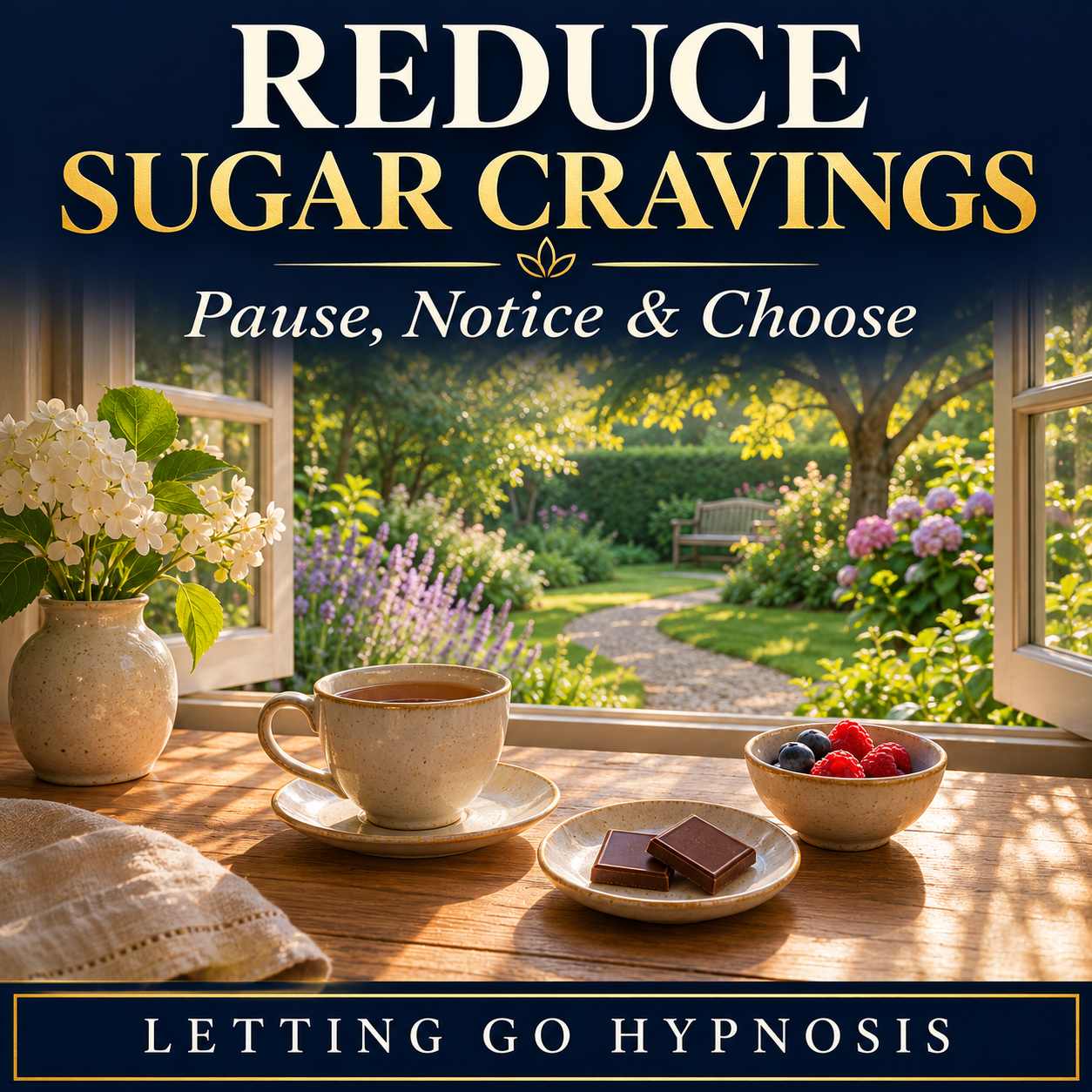
Reduce Sugar Cravings — Pause, Notice & Choose is a complete 34-minute 47-second session narrated by Theo, with licensed Mystic Dawn (Theta) music. Peaceful garden imagery leads into familiar kitchen, work and social situations, offering space to reflect on choices without guilt or rigid restriction.
Watch the full guided hypnosis recording
Own the ad-free MP3 — buy once, keep forever
Get Letting Go Hypnosis on Google Play
Choose how you listen: enjoy the complete video free, buy the downloadable MP3 for permanent ad-free listening with no subscription, or browse Weight & Healthy Eating in the Android app. The app also includes three complete free recordings.
Narrator: Theo. Music: Mystic Dawn (Theta) by Christopher Lloyd Clarke, licensed through Enlightened Audio.
Related reading and recordings
- Healthy Eating and Weight Management: A Practical Guide
- Manage Food Cravings & Feel More in Control
- How Hypnosis Works
- Buying and Download FAQ
- Browse all recordings
UK and US source links checked on 8 November 2026. This article provides general information for adults, not individual medical or dietary advice.


One Comment