How Can You Feel Satisfied with Balanced Portions Without Strict Food Rules?
Feeling satisfied with balanced portions starts with eating enough, enjoying a variety of foods and allowing flexibility. A portion does not have to look identical every day, and a food label cannot tell you exactly what your body needs at a particular meal.
If meals have become a running argument about whether you have eaten “too much” or “not enough”, a gentler starting point is possible. Instead of judging the plate, consider the whole experience: nourishment, enjoyment, comfort and the circumstances in which you are eating.
This guide accompanies Feel Satisfied with Balanced Portions, our 31-minute guided hypnosis recording narrated by Theo. It brings together practical reflection and public health information from the UK and US. The recording, video and source links are collected near the end.
What does a balanced portion mean?
It helps to separate two questions: what makes an eating pattern balanced, and how much food is right for you? Variety across food groups concerns the first question. Your individual nutritional needs concern the second. Neither requires every meal to be a perfect diagram.
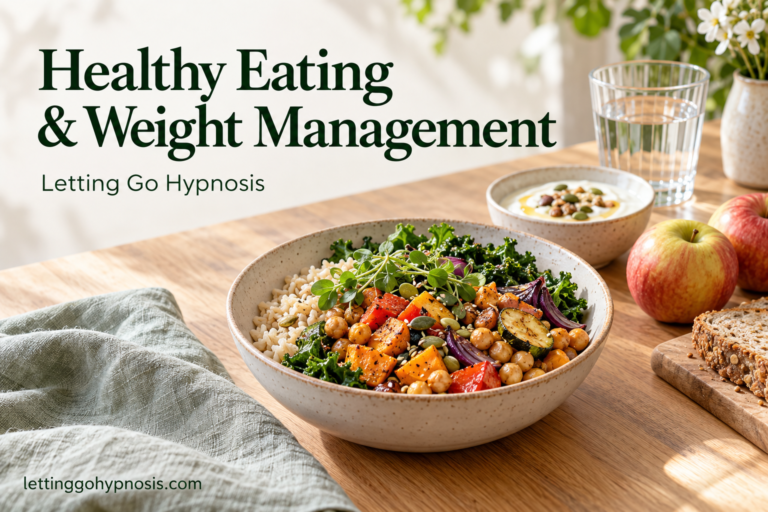
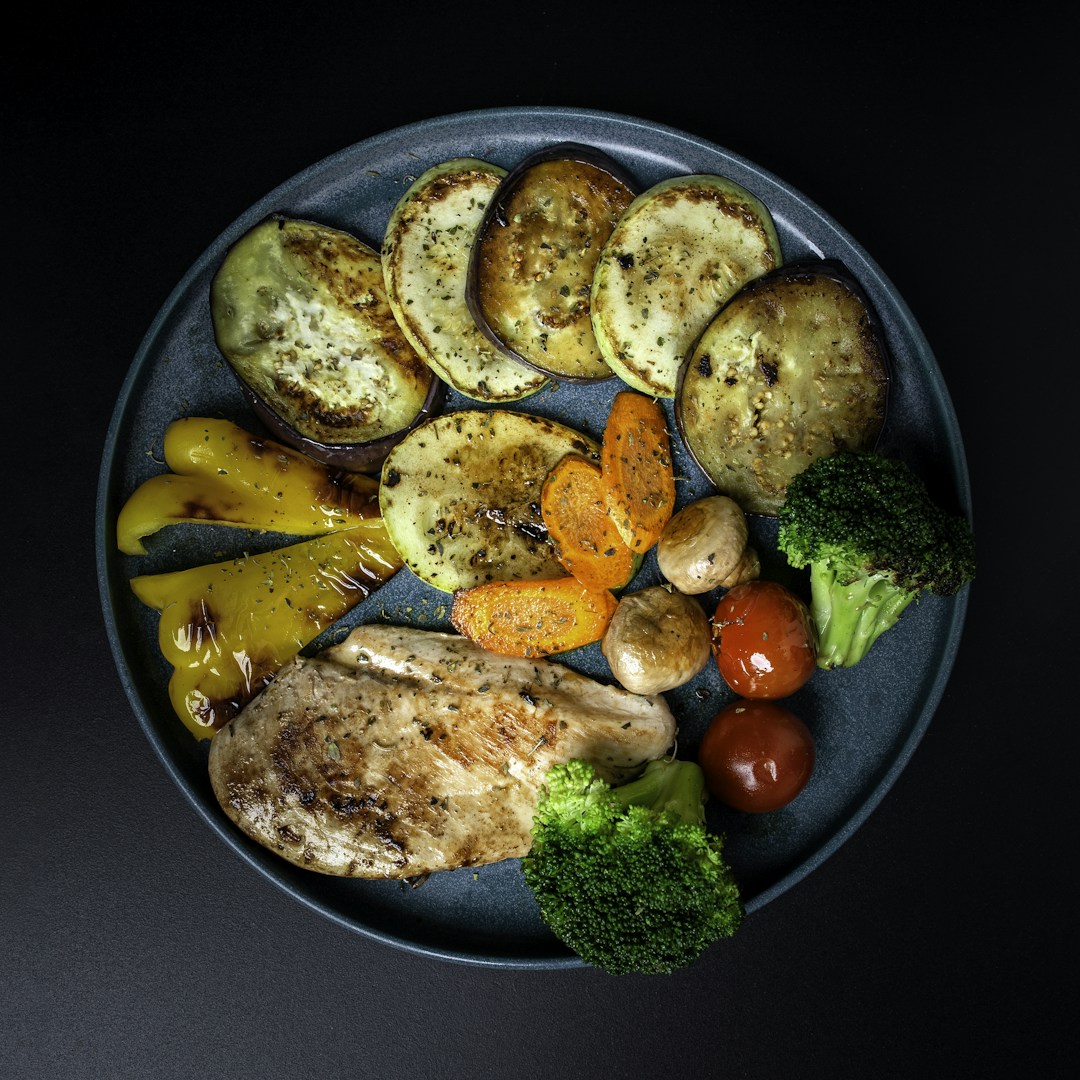
For example, a bowl of pasta with beans and vegetables, a sandwich with a side dish, or a familiar family meal can all be considered as part of your wider eating pattern. A photograph is an illustration, not a prescription for the amount you should eat.
What does UK health guidance say?
The NHS Eatwell Guide describes the overall balance of food groups. It explains that this balance can be considered across a day or a week, rather than achieved at every meal. Its guidance includes fruit and vegetables, starchy carbohydrates, protein foods, dairy or alternatives, and small amounts of unsaturated oils and spreads.
The NHS also suggests choosing higher-fibre or wholegrain varieties of starchy foods where possible. This is guidance about the overall pattern of eating, not a demand to remove carbohydrates or make your plate as small as possible. See the NHS source in the health-information links below.
What does US health guidance say about serving sizes?
The US Food and Drug Administration explains that the serving size on a Nutrition Facts label reflects amounts people typically consume. It is not a recommendation for how much you personally should eat or drink. A package can contain more than one labelled serving.
The National Institute of Diabetes and Digestive and Kidney Diseases distinguishes a portion—the amount you choose to eat at one time—from a serving used on a label. This distinction can make packaging less confusing: the label helps explain the food, but it does not provide an individual meal plan.
How can you approach meals with less pressure?
1. Begin with nourishment
Choose a meal that you expect to be enough for you. Avoid treating the smallest possible amount as an achievement. If a clinician or dietitian has given you a meal plan, follow that guidance rather than replacing it with a general article or recording.
2. Make room to enjoy the food
When practical, give yourself a moment to sit down and notice the flavour, texture and temperature. You do not need a silent room, a timer or a rule about how many times to chew. A busy lunch can still be a meal worth enjoying.
3. Try a gentle check-in
You might ask, “Am I enjoying this? Do I want more? How comfortable do I feel?” These are invitations to notice, not a test you must pass. You are allowed to continue eating. If checking your body repeatedly increases anxiety, leave the exercise aside and seek individual guidance.
4. Allow the next meal to be different
Perhaps yesterday’s lunch was enough, while today you want an additional sandwich or a snack later. Flexibility means that yesterday’s amount does not become today’s compulsory limit. You do not have to earn food or turn one meal into a verdict on your character.
5. Keep social eating human
At a café or a family gathering, you might choose something because it tastes good or because sharing food matters to you. Enjoyment belongs in the conversation too. A useful reflection afterwards could be, “What would make that experience more comfortable next time?” rather than, “Was I good or bad?”
Where does guided hypnosis fit?
Feel Satisfied with Balanced Portions offers a quiet opportunity to explore these themes through relaxation, garden imagery and imagined everyday situations. Theo’s narration is accompanied by licensed Mystic Dawn (Theta) music by Christopher Lloyd Clarke.
The session explores comfortable satisfaction, flexibility around meals and letting go of old judgments. It is a general wellbeing recording, not a personalised nutrition plan, an eating-disorder treatment or a promise of weight loss. The public health sources in this article do not endorse the recording or establish its effectiveness.
Listen somewhere safe and undisturbed, never while driving or operating machinery. The session ends with a gradual return to alertness. Do not use it to suppress hunger, delay needed food or replace professional care.
When should you seek individual support?
If eating brings persistent distress, severe restriction, episodes of losing control, or attempts to compensate for food, professional support matters more than finding another portion rule. Eating disorders can affect people at any body weight.
In the UK, the NHS recommends seeing a GP if you think you may have an eating disorder. In the US, NIMH recommends discussing concerns with a primary care provider, who can help arrange appropriate specialist support. Both organisations explain that treatment and recovery are possible. Their information is linked below.
Frequently asked questions
Does feeling satisfied mean eating less?
No. This article and recording are about a more flexible relationship with meals. Depending on your needs, eating enough may mean having more food, a different combination of foods or another meal or snack later.
Should I follow the serving size on every packet?
A labelled serving is useful for understanding the nutrition information. As the FDA explains, it is not a personal recommendation. Seek individual advice if you need help planning meals for a health condition.
Do I have to count calories to use the recording?
No. The session does not require calorie counting, weighing food or following a fixed portion chart.
Is this suitable as treatment for an eating disorder?
No. This recording is not an eating-disorder treatment. If you have an eating disorder or are in recovery, discuss whether this kind of recording is appropriate with your treating professional and follow your agreed care plan.
Watch the full recording on YouTube
Letting Go Hypnosis — Feel Satisfied with Balanced Portions | Guided Hypnosis for Mindful Eating
Watch Feel Satisfied with Balanced Portions on YouTube · Visit the Letting Go Hypnosis channel
Own the recording and explore more
Own the ad-free MP3—download it, keep it forever. No subscription.
Get Feel Satisfied with Balanced Portions
Related reading
- How to stop eating out of boredom without strict food rules
- How to build healthy eating habits with less pressure
- Healthy eating and weight management: a practical guide
UK and US health information and support
- UK — NHS: The Eatwell Guide.
- UK — NHS: Eating disorders: overview and getting help.
- US — FDA: Serving size on the Nutrition Facts label.
- US — NIDDK: Food portions: choosing just enough for you.
- US — NIMH: Eating disorders: what you need to know.
Health sources checked 10 November 2026. This article provides general information for adults and does not replace personalised medical or dietetic advice. Featured photograph: Narek Petrosyan / Unsplash.