How Can I Stop Panic Attacks and the Fear of Another One?
If you want to stop panic attacks, start with a healthcare assessment and a treatment plan suited to you. Cognitive behavioural therapy (CBT), medication or both can help with panic disorder. Relaxation recordings can offer optional support between episodes, but they cannot guarantee that attacks will stop.
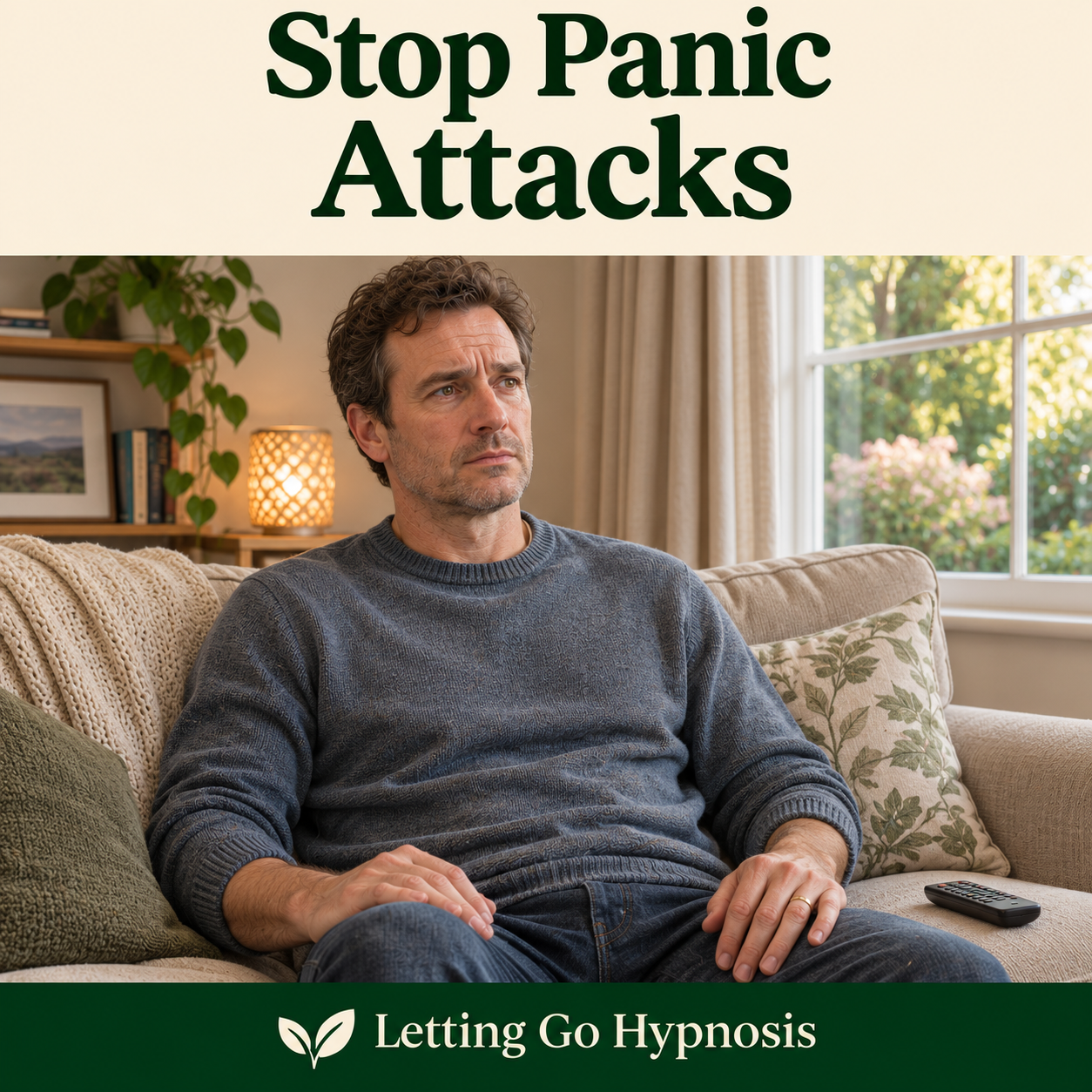
Sometimes the hardest part comes afterwards. You are watching television, enjoying a game with someone you trust or preparing supper, and a thought interrupts: “What if it happens again?” The evening becomes a check on how you feel instead of something you can enjoy.
This guide explores that fear of another panic attack. It accompanies Stop Panic Attacks, our complete guided hypnosis recording, and includes practical questions to discuss with a professional, UK and US support links, and the full YouTube recording below.
What is a panic attack, and is it the same as panic disorder?
A panic attack is a sudden surge of intense fear or discomfort, often with physical symptoms such as a racing heart, trembling or dizziness. Similar symptoms can have other causes. Repeated unexpected attacks, followed by ongoing worry or changes in behaviour, can be features of panic disorder; a clinician makes that assessment.
The US National Institute of Mental Health guide to panic disorder explains symptoms, assessment and treatment. Having an attack does not, by itself, establish a diagnosis.
Why do I keep worrying about another panic attack?
The NHS describes a cycle of fearing further attacks and avoiding situations. After a frightening experience, everyday plans may start to revolve around whether panic could happen again.
For example, you might sit down to watch a programme but keep asking yourself whether you feel calm enough to enjoy it. A visit from a friend becomes another occasion to monitor yourself. These examples illustrate the experience this recording explores; they are not a diagnosis or a claim about everyone who experiences panic.
What can I do when a familiar panic attack starts?
If a healthcare professional has assessed your symptoms as panic, follow the plan agreed with them. The NHS suggests remaining where you are if safe, breathing slowly and reminding yourself that the episode will pass. Keep breathing comfortable rather than forcing large breaths or holding your breath. If symptoms are different or you are unsure, seek medical advice.
You do not need to start a long recording during an attack. This session is designed for a separate period of safe rest between episodes.
What should I ask a professional about recurring panic?
It can help to take a short note to an appointment. You might write down when the episodes began, how often they happen and what you have stopped doing because of the fear. Consider asking:
- Could anything else be causing these symptoms?
- What treatment options suit my circumstances?
- Is CBT for panic available, and what would sessions involve?
- What should I do during another episode, and when should I seek urgent help?
NIMH identifies CBT as a commonly used psychotherapy for panic disorder. Treatment can include working with feared sensations and avoided situations under professional guidance. This recording does not provide that treatment or ask you to deliberately provoke symptoms.
Where can I get help with panic attacks in the UK?
- Start with your GP: discuss recurring attacks, ongoing fear or changes to daily life. Read the NHS panic disorder guide.
- England: adults can usually self-refer to NHS Talking Therapies without a diagnosis. Local eligibility applies.
- Scotland, Wales and Northern Ireland: ask your GP or local health service about psychological therapy routes; the England self-referral service does not cover the whole UK.
- Urgent support in England: call NHS 111 and select the mental health option. See NHS urgent mental health guidance. Use your local urgent-care service elsewhere in the UK.
Where can I get help with panic attacks in the US?
A primary care provider can assess your concerns and help you find a qualified mental health professional. Ask about experience treating panic, appointment availability, costs and insurance coverage.
- NIMH: Panic Disorder — What You Need to Know, for symptoms and treatment options.
- NIMH: Help for Mental Illnesses, for routes to care and immediate support.
- SAMHSA FindTreatment.gov, to search for treatment services.
Your insurer, state or county health department, college health service or workplace Employee Assistance Programme may also help identify support. These links are independent resources, not endorsements of our recording.
How does Stop Panic Attacks use the Letting Go Method?
Stop Panic Attacks is a 29-minute 4-second guided hypnosis recording for adults. Theo’s calm British narration is accompanied by Mystic Dawn (Theta) by Christopher Lloyd Clarke, used under licence from Enlightened Audio.
The Letting Go Method follows five stages: Relax, Recognise, Release, Reframe and Reinforce. In this recording, you are invited to notice manageable worry, allow it some space and explore softening the effort to push it away. “Release” is an invitation, not a demand to make a feeling disappear.
Three imagined scenes bring the practice into ordinary life: enjoying a programme at home, sharing a game and a laugh, and preparing and sharing a meal. You remain physically supported throughout. There is no deliberate symptom induction, breath holding or frightening memory recall.
The music provides a gentle background to the narration. The word “Theta” is part of the track’s name; we do not claim that listening guarantees a particular brainwave state or treats panic disorder.
Watch the complete Stop Panic Attacks recording
Listen free on YouTube before deciding whether you want a downloadable copy.
Watch Stop Panic Attacks on YouTube if the player does not appear.
Own the ad-free MP3
Download Stop Panic Attacks for £6.95, keep it forever and listen offline. One payment, no subscription. You receive the same complete recording available free on YouTube.
Own Stop Panic Attacks — view the recording in our shop
Visit Letting Go Hypnosis · Browse all recordings · Get the Android app
Frequently asked questions
Can hypnosis stop panic attacks permanently?
We cannot promise that. This recording offers optional relaxation and wellbeing support between episodes. It has not been established as a treatment for panic disorder and does not replace individual assessment or evidence-based care.
Should I wait until the next attack to listen?
No. Choose a separate, safe time when you can rest. The recording is not an emergency intervention, and you do not have to use it to cope with an attack.
What if I do not feel completely calm?
You do not have to achieve a particular feeling or complete every suggestion. Keep the imagined scenes gentle, skip anything uncomfortable or stop. If listening increases distress, leave the recording and seek appropriate support.
Is the free YouTube version different from the MP3?
The guided session is the same. Buying gives you an ad-free MP3 to download and keep, with no subscription. It does not make the recording therapeutically superior.
Related guidance
- Why Am I Scared to Leave the House? A Guide to Agoraphobia and Getting Help
- How Can I Stop Worrying About Tomorrow Before It Happens?
- Subscribe to Letting Go Hypnosis on YouTube
Written by Nick George for Letting Go Hypnosis, the consumer brand of Letting Go Labs Ltd. Sources checked on 20 November 2026. This article provides general information and does not diagnose symptoms or give individual medical advice.