
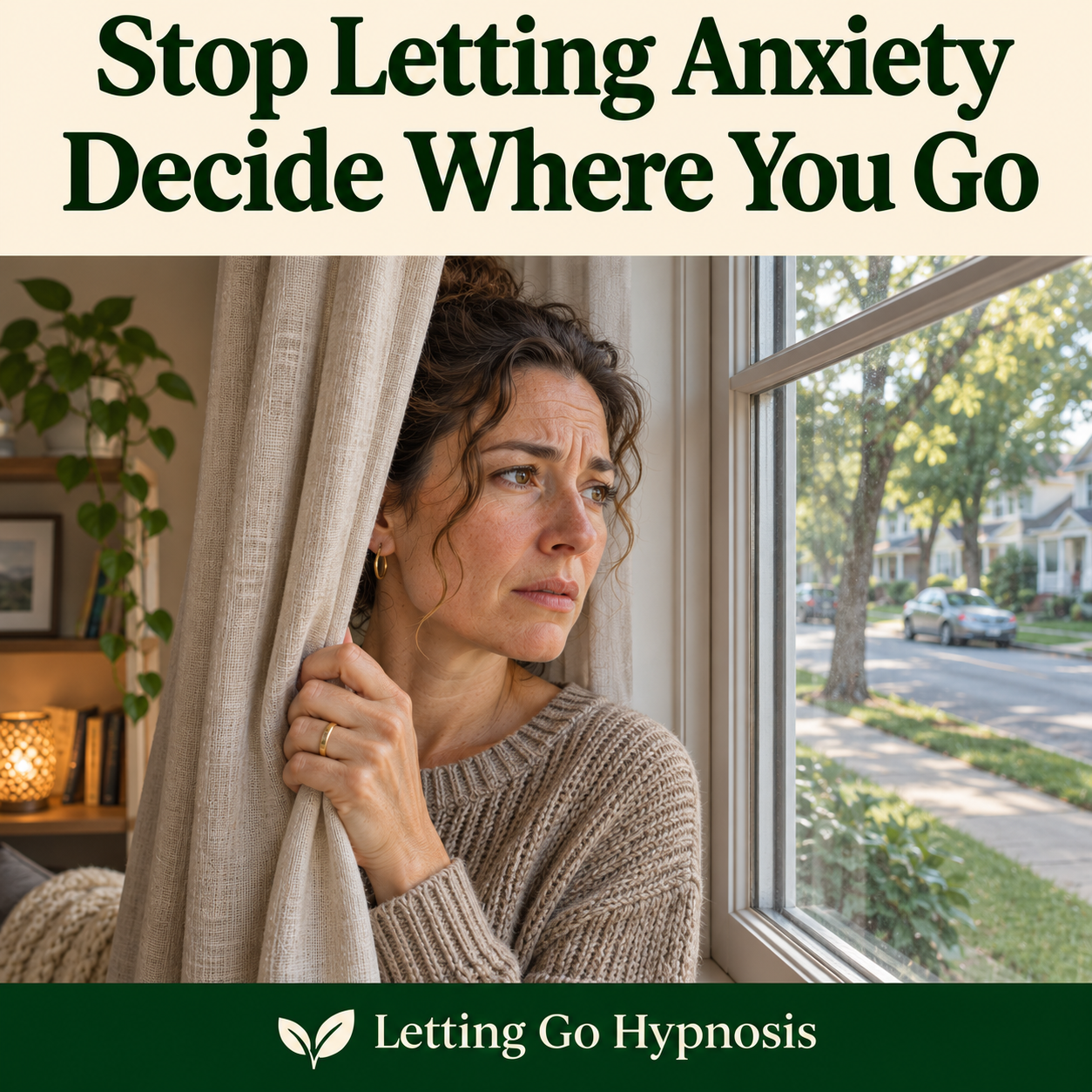
Why Am I Scared to Leave the House? A Guide to Agoraphobia and Getting Help
If you are scared to leave the house, the fear may be about what could happen once you are out: feeling panicky, being unable to leave easily, or not getting help. Agoraphobia is one possible explanation, but it is not the only one. If fear is limiting your life, a GP or other qualified healthcare professional can help you understand what is happening and discuss treatment.
You get your coat on. Your keys are ready. Then you start wondering how far you will get, whether the shop will be busy, and what you will do if that familiar feeling starts. A simple trip becomes a string of questions. Eventually, staying home feels easier.
If that sounds familiar, you do not have to find a perfect explanation before asking for help. This guide explains the difference between everyday worry and agoraphobia, what established treatment can involve, and where to find support in the UK and US. It also introduces Stop Letting Anxiety Decide Where You Go, our accompanying guided hypnosis recording.
Written by Letting Go Hypnosis, Letting Go Labs Ltd. Published 17 November 2026. Guidance and service links checked on that date. This is general information for adults, not a diagnosis or an individual treatment plan.
Does being scared to leave the house mean I have agoraphobia?
Not necessarily. The NHS describes agoraphobia as fear of situations where getting away or finding help might be difficult. It can involve public transport, shopping centres or going out alone. For some people, leaving home becomes very difficult.
It is more than a fear of open spaces. A queue, a crowded bus or somewhere far from home can feel difficult for different reasons. Some people have a history of panic attacks; others do not. A professional assessment matters because feeling afraid to go out does not, by itself, tell you the cause.
You might describe the problem without using a medical word at all:
- “I want to go, but I keep putting it off.”
- “I am frightened I will panic and not be able to get home.”
- “I only feel comfortable if someone comes with me.”
- “I keep cancelling things I actually want to do.”
Those are useful things to tell a healthcare professional. You do not need to make them sound more clinical.
When should I ask for help?
Ask for help when anxiety is making everyday life harder—for example, when shopping, appointments, work or seeing people are becoming difficult. You do not have to wait until you cannot leave home at all.
You could start with: “I am avoiding going out because I am frightened of how I might feel. It is affecting my life, and I would like help.” Add what you have stopped doing, how long it has been happening and any physical symptoms that worry you.
If attending feels impossible, say that when you contact the service. The NHS says a telephone consultation should be possible for someone who does not feel ready to visit their GP about agoraphobia. In the US, ask your provider about telehealth. Availability, costs and suitability vary.
Do not assume new or unfamiliar physical symptoms are anxiety. Get medical advice about symptoms you have not had assessed, especially if they are severe or different from your usual experience. For a life-threatening emergency, call 999 in the UK or 911 in the US.
What treatment can help with agoraphobia and panic?
The NHS treatment guide describes a stepped approach that can include information and self-help, guided self-help, cognitive behavioural therapy (CBT), and medication when appropriate. What is offered should reflect your needs and circumstances.
CBT looks at the connection between thoughts, feelings and behaviour. For panic disorder, the US National Institute of Mental Health (NIMH) describes CBT as a well-studied treatment. Exposure methods can be part of CBT, helping someone work with feared sensations or activities they have been avoiding.
That does not mean someone should spring a frightening outing on you. Ask a qualified therapist how they would agree a plan with you, what support you would receive, and how they would adapt it if you struggled. An imagined scene in a recording is not the same as an individual course of CBT or exposure therapy.
Medication may be discussed with a prescriber. Do not start, stop or change prescribed medicine on the basis of this article or a recording.
What can I do while I arrange support?
You do not need to turn today into a test of how far you can get. A useful first step may be making contact with a service, writing down what you want help with, or asking someone you trust to sit beside you while you make the call.
Make the problem easier to explain
Write down one recent example: where you wanted to go, what you feared, and what happened next. Keep it brief. The aim is to help a professional understand the impact, not to monitor every sensation all day.
Ask for the kind of help you need
“Can you help me contact the GP?” is more specific than “I cannot cope.” If phone calls are difficult too, ask about online contact options. Mind’s guide to coping with phobias discusses preparing what to say, having someone with you, and asking about different appointment formats.
Discuss manageable steps with your therapist
If you are receiving treatment, follow the plan you have agreed together. Tell your therapist if a step feels unworkable or if you have begun treating a particular object, person or routine as something you must have before going out. That gives you something concrete to work on together.
Give ordinary needs some attention
The NHS includes regular activity, balanced meals and reducing caffeine among its self-help suggestions for agoraphobia. It also advises against relying on alcohol or drugs for relief. These habits can support wellbeing, but they do not replace treatment when anxiety is restricting your life.
How can I support someone who is afraid to go out?
Start by asking what they want you to understand. A cancelled invitation may mean they wanted to come and felt unable to manage it. Try: “I am glad you told me. Would it help to talk, or would you like help contacting someone?”
Avoid making promises on their behalf or arranging a surprise challenge. Offer practical help with finding a service or preparing questions. If they have a therapist, encourage them to ask how friends or family can support the treatment plan.
Watch: Stop Letting Anxiety Decide Where You Go
This 32-minute 13-second recording uses Theo’s calm British narration, natural pauses and softly mixed Mystic Dawn (Theta). While you rest safely, you imagine familiar moments such as standing outside your front door, visiting a shop and spending time with someone you trust.
Watch the full recording on YouTube if the player does not appear.
Where does hypnosis fit?
This recording is offered for general wellbeing alongside appropriate care. It is not a treatment for agoraphobia or panic disorder. The treatment guidance linked in this article does not establish that this particular recording treats either condition. There is no guaranteed result.
You are invited to notice fear and pressure gently, rather than make yourself feel a particular way. Leave out any imagined scene that feels too much. You can open your eyes, move or stop whenever you wish. You do not have to complete the session.
Listen only somewhere safe to sit or lie down. Never listen while driving, walking outside, operating machinery or doing anything that needs your full attention. The journeys happen in your imagination. The recording ends with a gradual return to full awareness; become fully alert before standing or returning to your day.
Listen free, or own the ad-free recording
Own Stop Letting Anxiety Decide Where You Go — an MP3 to download and keep. The UK shop price is £6.95; check the checkout for the price and currency shown in your location. One payment. No subscription.
Get the Letting Go Hypnosis Android app for app listening, including background playback and offline downloads of purchased recordings. Read the buying and download FAQ for purchase guidance.
Where can I get help in the UK?
Start with your GP if you are unsure which service fits. Explain if leaving home or making calls is itself part of the difficulty. The England self-referral route below is not a UK-wide booking service.
| Where you live | Guidance and routes to support |
|---|---|
| England | Find NHS Talking Therapies. Adults can self-refer; some services also accept 16- and 17-year-olds. You do not need an existing diagnosis. Check your local service’s eligibility and waiting times. |
| Scotland | Contact your GP about local treatment. NHS inform’s phobias guide explains support and treatment. For urgent mental-health support, NHS 24 explains its mental-health services, including the 111 route. |
| Wales | Ask your GP about local services. NHS 111 Wales mental-health and wellbeing guidance lists support options. For urgent mental-health support, call 111 and select option 2. |
| Northern Ireland | Your GP can assess your needs and discuss next steps. nidirect’s mental-health services and support guide explains local routes and further help. |
For further reading, see the NHS agoraphobia overview, its treatment guide, and Mind’s practical support information.
Urgent help: In England, use NHS urgent mental-health guidance, call 111 and select the mental-health option, or request an urgent GP appointment. For immediate danger or a life-threatening emergency anywhere in the UK, call 999.
Where can I get help in the US?
Contact a primary care provider or a licensed mental-health professional. Tell them what you are avoiding and ask about experience with panic, agoraphobia and CBT. NIMH’s panic disorder guide explains assessment and treatment, including when agoraphobia occurs alongside panic.
- NIMH: Getting Mental Health Support Virtually explains remote appointments. Ask about availability, privacy, costs and insurance coverage before booking.
- SAMHSA: Find health care or support helps you explore professional care and options when cost is a barrier.
- FindTreatment.gov is a treatment-service locator linked by NIMH and SAMHSA. Confirm that a service treats your particular concern and accepts your insurance or payment arrangements.
If you need urgent crisis support, use SAMHSA’s crisis-support information. In an immediate life-threatening emergency, call 911. A recording or blog is not an emergency service.
Your questions answered
Can I have agoraphobia without panic attacks?
Yes. The NHS notes that not everyone with agoraphobia has a history of panic attacks. An assessment can help clarify what is driving your fear and which support is appropriate.
What if I cannot leave home to get help?
Tell the service before booking. Ask about a telephone or online first appointment and whether someone you trust can support you. Remote options depend on the service and your circumstances.
Should I force myself to go somewhere frightening?
Discuss an agreed approach with a qualified therapist. CBT may include exposure work, but an individual treatment plan is different from setting yourself a sudden, overwhelming challenge or following a generic recording.
Can I use the recording while walking to the shop?
No. Use it only while safely resting. Do not listen while walking outside or doing anything that requires your full attention.
Will listening cure agoraphobia?
We do not claim that it will. This recording is general wellbeing support, not a treatment or a substitute for assessment, CBT, prescribed medication or other appropriate care.
Can I listen without buying anything?
Yes. The complete recording is free on YouTube. Buying the MP3 gives you an ad-free file to download and keep, with no subscription.
More from Letting Go Hypnosis
- Stop Letting Anxiety Decide Where You Go — recording and download
- Ease Anxiety & Let Go of Worry
- Calm Your Mind & Body
- What Is the Letting Go Method?
- How hypnosis works · Browse the shop · Contact us
Letting Go Hypnosis is a consumer brand of Letting Go Labs Ltd, United Kingdom. Narration: Theo. Recording music: Mystic Dawn (Theta) by Christopher Lloyd Clarke, Enlightened Audio, used under licence. The independent organisations linked above provide their own information and services; inclusion does not imply endorsement of this recording. This article has not been presented as clinically reviewed.




One Comment