
How Can I Calm Driving Test Nerves? UK and US Preparation Guide
To feel calmer before a driving test, combine practical preparation with a simple routine for managing nerves. Check that your driving skills are ready, rehearse test conditions with your instructor and plan the details of the day. You do not have to eliminate every nervous feeling: the aim is to stay alert, respond safely and focus on the next task.
Perhaps you drive comfortably during lessons, then imagine an examiner beside you and start replaying everything that could go wrong. Or a previous test has left you worrying that one mistake will happen again. A driving test matters, but its result is not a verdict on your intelligence, independence or worth.
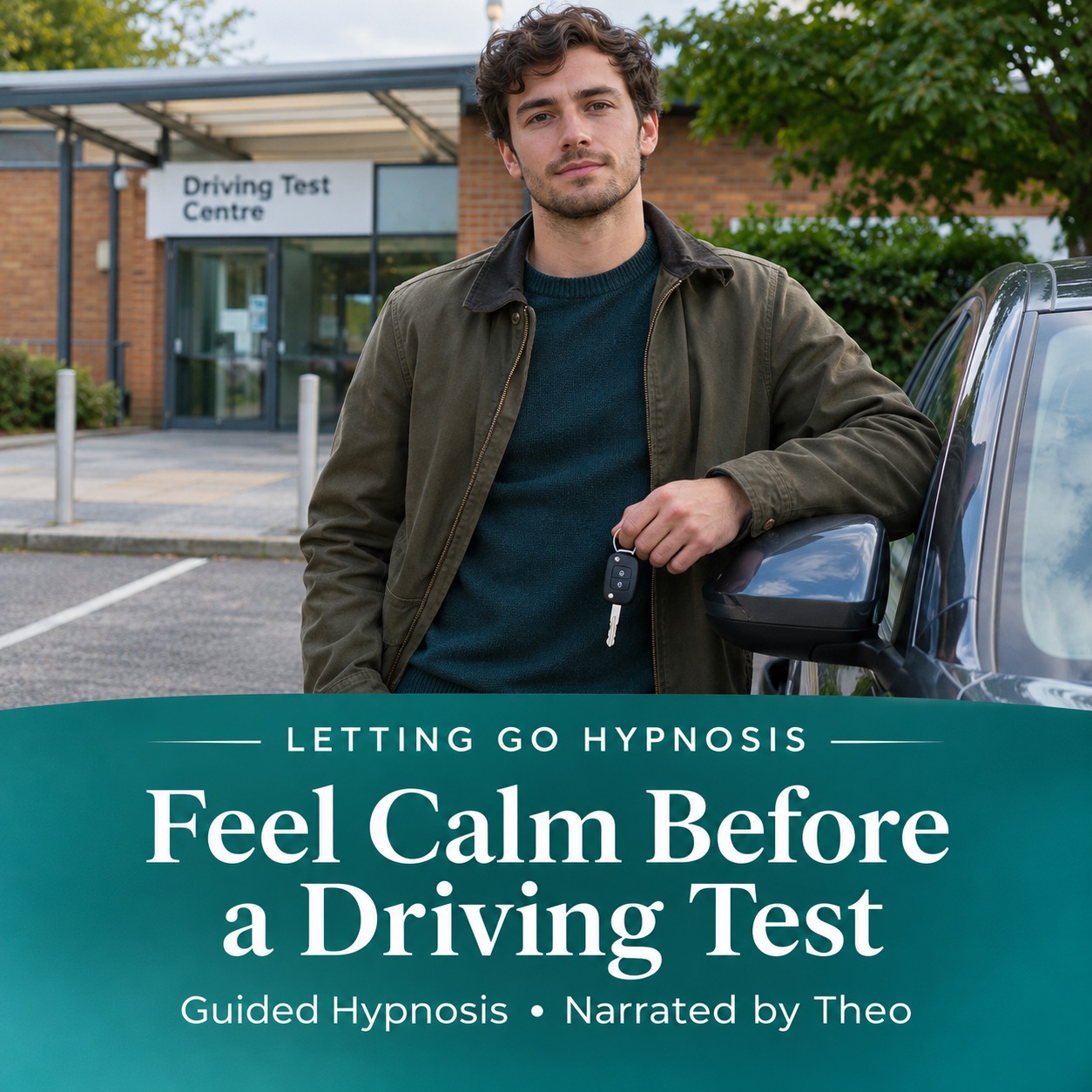
This guide brings together official UK and US resources with gentle preparation ideas to accompany Feel Calm Before a Driving Test, our full guided hypnosis recording with Theo.
How can I prepare for driving-test nerves?
1. Find out whether the worry is about readiness or being assessed
Ask your instructor: “Which parts of my driving still need support, and which can I do independently?” A specific answer gives you something to practise. Feeling more confident is helpful, but it cannot substitute for safe observations, sound judgement and consistent control of the vehicle.
For learners in Great Britain, the DVSA readiness checklist looks for independent driving without prompts, no serious or dangerous mistakes, successful mock tests, practice managing nerves and agreement from your instructor that you are ready. Use these practical signs rather than a deadline you feel pressured to meet.
2. Rehearse the situation, not a perfect performance
Discuss mock tests with your instructor. Afterwards, identify one thing that went well and one skill to work on. Ask about the moments that unsettle you: unfamiliar directions, waiting at a busy junction or seeing the examiner make notes.
At home, while safely resting, you could briefly imagine arriving, listening carefully and taking the test one instruction at a time. Include a moment of uncertainty and picture yourself responding sensibly. This is an optional reflection exercise, not a replacement for supervised driving practice.
3. Reduce avoidable pressure before test day
The DVSA guidance on managing nerves recommends planning ahead, getting enough sleep, avoiding excessive caffeine and staying focused on the present. Talk with your instructor about approaches you can practise before the test.
Make a short preparation list: appointment details, required documents, the vehicle arrangements and your journey to the test location. Check the current requirements with the authority running your test. Aim to make the morning familiar rather than adding last-minute tasks or searching for a “guaranteed pass” trick.
4. Make space for the feeling without turning it into a prediction
While sitting safely at home, notice what you are feeling and give it a simple name: “I am nervous about being watched.” You might gently ask, “Could I let this feeling be here for a moment, without deciding what it means about my test?” Let your breathing remain comfortable; you do not need to force deep breaths or make the feeling disappear.
Then choose one useful action, such as asking your instructor a question or organising your documents. This is how we use the Letting Go approach here: acknowledge the feeling, soften the self-judgement and return to something practical. Read more in our guide to the Letting Go Method.
What should UK learners know?
England, Scotland and Wales
Use GOV.UK’s practical driving-test guide to familiarise yourself with the current format. It covers the eyesight check, vehicle-safety questions, general and independent driving, and reversing. Let your instructor help you prepare for the actual skills being assessed.
One useful distinction: GOV.UK says taking a wrong turning is not itself a fault. The examiner helps you return to the route. That does not mean an unsafe manoeuvre is acceptable; follow road rules and prioritise safe driving over trying to recover a missed turn.
A mistake also does not automatically mean you have failed. Its seriousness matters. Continue listening and driving safely rather than deciding the result yourself. The examiner, not your internal commentary, assesses the test.
Northern Ireland
Northern Ireland uses the Driver & Vehicle Agency (DVA). Check nidirect’s practical-test information for the applicable process, preparation and booking guidance. Do not assume that Great Britain’s procedures or appointment rules apply unchanged.
What should US learners know before a road test?
Start with your own state or territory’s official licensing authority. Road-test requirements are not identical across the United States. Use USAGov’s motor-vehicle services directory to find the relevant agency, then read its current driver handbook and test instructions.
Make a checklist from that agency’s guidance: eligibility and permit conditions, appointment arrangements, identification, any required accompanying driver, and vehicle documentation and condition. Check arrangements for any support or accommodation you need with the agency in advance.
For example, California DMV’s preparation guide describes a pre-drive safety check and a behind-the-wheel driving performance evaluation. This is a California example, not a nationwide test format.
Practise the skills required locally with an appropriate instructor or legally permitted supervising driver. Use the test’s actual assessment criteria to guide preparation, rather than relying on social-media claims about what every examiner wants. British terms and imagery in our recording are for general emotional preparation; local laws and examiner instructions always take priority.
What if I feel overwhelmed during the test?
Keep your eyes open and your attention on the road. If an instruction is unclear, ask the examiner to repeat or clarify it rather than guessing. Follow their directions and the applicable road rules.
If you feel unable to continue safely, tell the examiner promptly and follow their instructions for bringing the vehicle to a safe stop. A test result is never more important than safety. Do not attempt an eyes-closed relaxation exercise, listen to hypnosis or use your phone while driving.
Afterwards, review the feedback with your instructor when you have had time to settle. “I need more practice with this situation” gives you a useful next step. “I will never be able to drive” does not describe what the feedback actually tells you.
When should I seek extra help with anxiety?
If worry is regularly disrupting sleep, daily activities or your ability to engage with lessons, consider professional support alongside your driving preparation. You do not need to wait for another unsuccessful test before asking for help.
UK: The NHS guide to anxiety, fear and panic explains symptoms, self-help options and routes to support. Speak to a GP or qualified mental-health professional if you are struggling to cope.
US: The National Institute of Mental Health’s “Do I Need Help?” guide encourages considering how symptoms affect everyday life and talking to a healthcare provider when symptoms worsen or self-care is not helping.
How does the matching hypnosis recording fit in?
Feel Calm Before a Driving Test is a 31-minute, 36-second guided session narrated by Theo, with Mystic Dawn (Theta) by Christopher Lloyd Clarke. It includes relaxation, a peaceful garden visualisation, letting go of test pressure, realistic mental rehearsal and a gradual return to alertness.
The session invites you to explore a steadier response to arriving at the test centre, hearing instructions and recovering your focus after a difficult moment. It is offered for relaxation and general wellbeing. Individual experiences vary; it does not teach driving skills, treat an anxiety disorder or guarantee a pass.
Listen only while safely resting, never while driving, during a lesson or test, or while operating machinery. Allow time afterwards to become fully awake and alert before driving. Stop listening if you feel uncomfortable.
Frequently asked questions
Do I need to feel completely calm to take my driving test?
You may still feel nervous. Readiness is about your ability to drive safely and independently, not achieving a particular emotion. Discuss both your skills and your response to test conditions with your instructor.
Can hypnosis guarantee that I pass?
No. A recording cannot guarantee a test result or replace lessons, road knowledge and practical preparation. It offers an optional setting for relaxation and reflection.
Should I listen in the car just before the test?
Plan listening for a separate period of safe rest, with enough time afterwards to become fully alert. Never listen while driving or during a lesson or test. Do not begin driving if you remain sleepy or distracted.
Is the recording suitable for US road-test preparation?
US learners can use the general relaxation and confidence exercises while resting. The narration uses British English and imagery; follow your own state’s requirements and your examiner’s instructions.
Can I listen without buying the MP3?
Yes. The complete recording is free to watch on YouTube below. Buying the MP3 is optional and gives you an ad-free download to keep permanently, with no subscription.
Watch Feel Calm Before a Driving Test on YouTube
Watch the complete recording on the Letting Go Hypnosis channel: Driving Test Nerves? Guided Hypnosis to Feel Calm & Prepared.
Watch the full driving-test hypnosis recording · Visit the Letting Go Hypnosis YouTube channel
Own the ad-free recording
Download Feel Calm Before a Driving Test — keep your MP3 forever, with no subscription.
Browse all hypnosis recordings · Get the Letting Go Hypnosis Android app · Visit lettinggohypnosis.com
Official UK and US guidance: useful links
- DVSA: managing driving-test nerves
- DVSA: check whether you are ready
- GOV.UK: what happens during the test in Great Britain
- nidirect: Northern Ireland practical-test guidance
- USAGov: find your state motor-vehicle agency
- California DMV: knowledge and drive-test preparation
- NHS: help with anxiety, fear and panic
- NIMH: deciding when to seek mental-health support
Prepared by Letting Go Hypnosis, part of Letting Go Labs Ltd. Sources checked 11 November 2026. General information and wellbeing support, not individual driving instruction or medical advice. Requirements can change; check your licensing authority’s current guidance. The organisations linked above do not endorse this recording.