
How to Feel Calmer During Take-Off and Turbulence
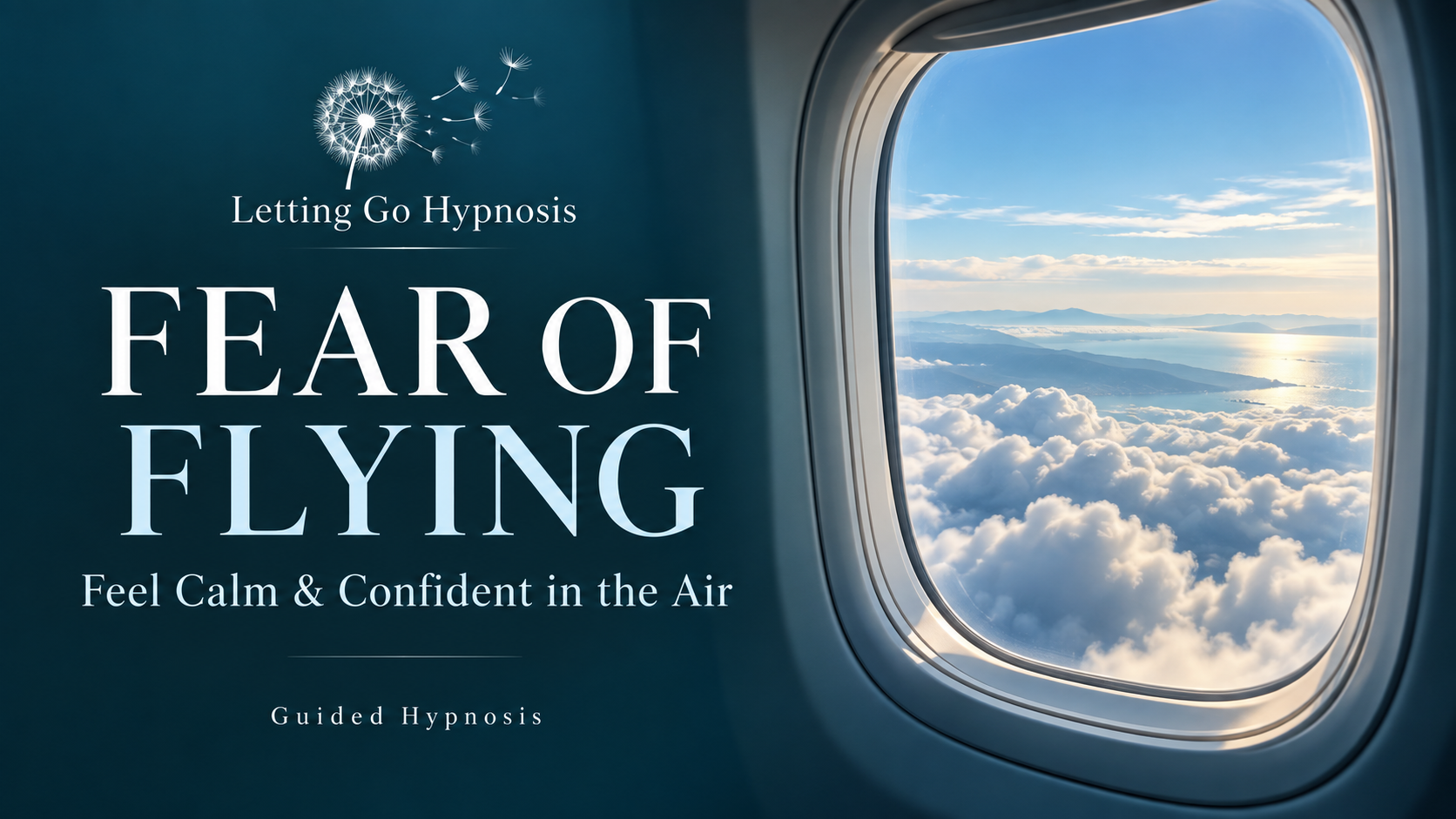
The engines grow louder. The aircraft begins to move faster. You notice your hands tightening around the armrests, and your thoughts race ahead of what is actually happening.
For some people, take-off is the hardest part of flying. For others, it is an unexpected bump after they have begun to settle. You may understand that movement is part of a flight and still find yourself bracing for the next sensation.
A useful aim is to prepare a manageable response to those moments. You do not have to make complete calm a condition of travelling. This guide explores practical preparation, a gentle Letting Go exercise and where to find further support.
Identify what feels difficult
“I am frightened of flying” can contain several different concerns. You might dislike the acceleration, feel uneasy when you cannot see what is happening, worry about turbulence or fear becoming visibly anxious beside another passenger.
Try finishing this sentence: “The moment I find hardest is…” A more specific answer gives you something useful to discuss with a travelling companion, airline staff or a qualified professional.
If your worry begins days before departure, our guide to managing pre-flight anxiety covers packing, the night before travel and waiting at the airport. For a broader introduction, read How to Feel Calmer About Flying, One Step at a Time.
Understand turbulence without trying to predict every movement
The US Federal Aviation Administration explains that turbulence involves irregular air movement and can occur even when the sky appears clear. Unexpected movement can cause injuries, which is why practical precautions matter.
Keep your seat belt fastened while seated, follow crew instructions and pay attention to the safety briefing. Read the FAA’s guidance on turbulence and passenger safety.
A general article cannot assess the conditions on your particular flight. Let the crew provide information about what is happening rather than trying to diagnose every change in sound or movement yourself.
Prepare a simple response before departure
When you are already tense, a long list of techniques can feel like another task to get right. Choose a short plan in advance: follow safety instructions, notice any unnecessary gripping and ask for help when you need it.
You might tell your companion, “Take-off is the part I find difficult. It helps when you speak to me normally.” If you are travelling alone, let a member of cabin crew know that you feel nervous when there is an appropriate opportunity.
Keep practical preparation separate from the search for absolute certainty. Check the information you need from your airline and airport, then give yourself permission to return to other parts of your day.
During take-off: attend to the next moment
With your seat belt fastened and your belongings stowed as instructed, notice where you are supported by the seat. If you are gripping harder than you need to, see whether your fingers can loosen slightly. Let your breathing stay comfortable rather than forcing a large breath.
A short phrase may be easier to return to than a long argument with your thoughts: “I can feel nervous and follow the next instruction.” You do not have to convince yourself that you enjoy the experience.
Remain attentive to the crew and your surroundings. These brief, eyes-open suggestions are different from listening to a full hypnosis session, which is best practised somewhere quiet before travelling.
When a bump brings the worry back
You might have settled for several minutes before a movement makes your body tense again. That does not erase the quieter moments you have already had. Start with the practical response: remain seated with your belt fastened and follow the crew’s directions.
Then notice what you are adding. Are you clenching your jaw, holding your breath or mentally rehearsing the rest of the flight? If it feels comfortable, release one unnecessary effort and return attention to something ordinary in front of you.
You could read a few lines, speak to your companion or simply notice your feet resting on the floor. There is no need to check constantly whether the anxiety has disappeared. Tell cabin crew if you feel unwell, and do not automatically dismiss new or unexplained symptoms as anxiety.
A gentle Letting Go practice before you travel
In a safe, quiet place at home, bring to mind a manageable part of your journey. Choose something mild enough to explore comfortably; you do not need to imagine your most frightening scenario.
- Notice: acknowledge whatever feeling is present without searching for more.
- Allow: see whether it can be there briefly without an argument. “This is how I feel just now” may be enough.
- Soften: ask whether you can ease some of the effort involved in resisting the feeling.
- Return: notice your actual surroundings and choose one small, useful action.
This is an optional reflection, not a test of whether you can make anxiety vanish. Keep your eyes open if you prefer, and stop if the exercise feels uncomfortable. A self-guided exercise is not a substitute for an individual treatment plan.
When to seek support: UK and US resources
If fear is preventing important journeys, repeatedly disturbing your sleep or affecting daily life, consider professional support before your travel date.
- UK: The NHS guide to phobias explains symptoms and treatment options. Speak to your GP about support. In England, the NHS page also provides access to self-referral information for talking therapies.
- US: The Anxiety and Depression Association of America’s fear-of-flying guide discusses the fear that can appear before a flight and approaches to treatment. Its Find Your Therapist directory can help you explore professional support.
The NHS includes cognitive behavioural therapy among treatment options for phobias. A qualified professional can help you consider an approach suited to your circumstances. Relaxation audio does not replace that assessment or care.
Feel Calmer About Take-Off & Turbulence: the guided recording
For quiet practice before your journey, Feel Calmer About Take-Off & Turbulence is a complete 40-minute, 24-second guided hypnosis session using the Letting Go Method.
Theo’s gentle narration is accompanied by Mystic Dawn (Theta), with breathing pauses, an opening safety notice and a gradual return to alertness. The session offers imagined rehearsal of take-off and aircraft movement, with an invitation to soften unnecessary tension and respond more steadily.
- Download the MP3 for £6.95 — one payment, permanent access and no subscription.
- Listen to the full recording on YouTube.
Listen safely
Practise in a safe, quiet place before travelling. Never listen while driving, operating machinery or doing anything requiring your full attention. If listening during a flight, keep the volume low enough to hear announcements, pause for safety briefings and follow crew instructions. Keep your seat belt fastened while seated. You may keep your eyes open, pause or stop whenever you wish. Allow yourself to become fully alert before resuming activities.
This recording supports relaxation and emotional wellbeing. It does not guarantee an anxiety-free flight or replace medical or mental health care. Individual experiences vary.
Related recordings and further reading
- Let Go of Pre-Flight Anxiety — Approach Your Journey Calmly: preparation for the days before departure, packing and airport waiting. Listen on YouTube.
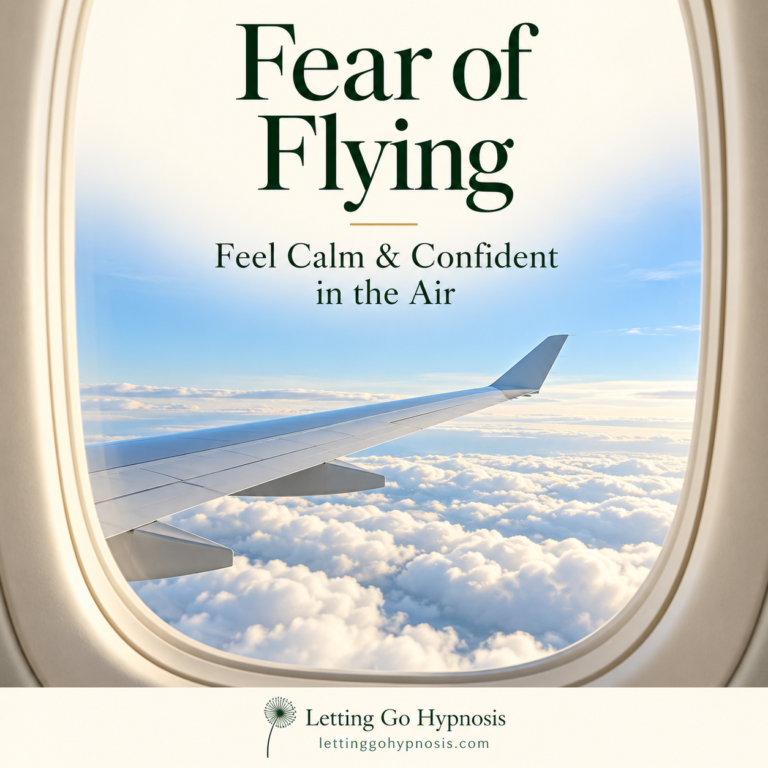
- Fear of Flying — Feel Calm & Confident in the Air: a broader imagined journey from preparation to arrival.
- Fear of Flying Support Bundle: the updated collection of Fear of Flying, Let Go of Pre-Flight Anxiety, and Feel Calmer About Take-Off & Turbulence. Three complete MP3s for £14.99, with permanent access and no subscription.
- How hypnosis works: an introduction to the approach.
- Browse the full recording collection or explore the Letting Go Hypnosis Android app.
Questions about take-off and turbulence anxiety
Do I have to stop feeling nervous before I fly?
You do not need to set perfect calm as your goal. Planning how to respond to nerves and where to ask for support may be more useful. If the fear feels overwhelming, seek personalised help ahead of your journey.
Is the recording designed to replace the safety briefing?
No. Always give safety instructions your full attention. Quiet practice before travel is the recommended starting point; the recording never takes priority over the crew.
Is the full session available free on YouTube?
Yes. The linked video contains the complete 40:24 recording with Theo and Mystic Dawn. Purchasing the MP3 provides a downloadable copy for personal offline listening.
You can prepare for the next journey without asking yourself to control every feeling it brings. Start with one manageable step, keep practical safety advice in view and let support be part of the plan.
Narration: Theo, an AI voice produced using ElevenLabs for Letting Go Hypnosis. Music: Mystic Dawn (Theta), composed by Christopher Lloyd Clarke and licensed from Enlightened Audio.



One Comment